


A Nation After the Classroom
When All Of Us Are Dead first arrived, it trapped its characters inside a high school and asked a simple, brutal question: how long can innocence survive when civilization collapses? Season 2 widens that question to an entire nation. The classroom is gone, the rules are rewritten, and what remains is a haunting meditation on evolution, fear, and the price of survival.

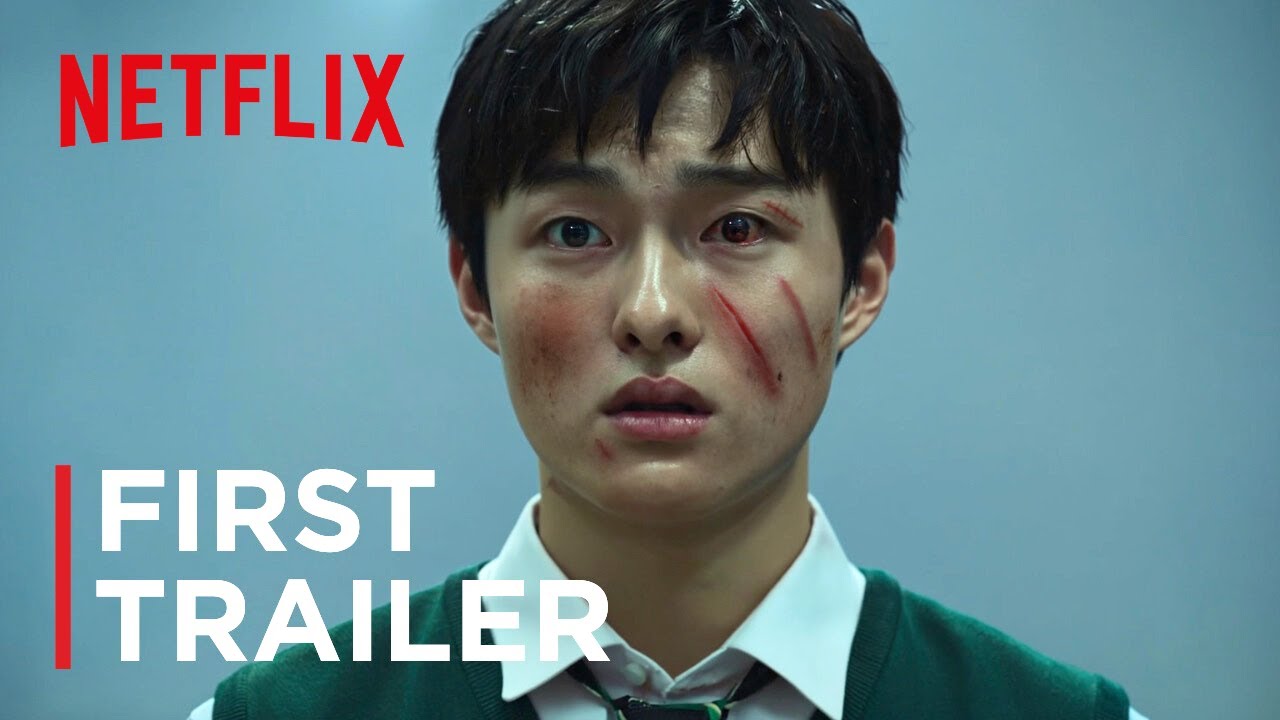
The official first look for Season 2 wastes no time announcing its intentions. This is a darker, faster continuation that refuses nostalgia, choosing instead to push its world forward into moral and biological uncertainty.

The Story Moves Beyond Survival
The quarantine walls that once promised safety are revealed as cages of another kind. As Hyosan smolders in ruins, Nam-ra emerges not as a fugitive, but as a leader. Her kind, the so-called “half-bies,” exist in a terrifying middle ground: no longer human, not fully monstrous.

The season’s central idea is captured in a chilling line: the cure is not a vaccine, but evolution. This thematic shift elevates the series from a conventional zombie thriller into something more unsettling. The virus now learns, adapts, and organizes, mirroring humanity’s own instinct to dominate or destroy what it cannot control.
Characters Tested by a Changed World
Season 2 appears determined to test its survivors not just physically, but philosophically. Nam-ra’s transformation into a commanding, morally ambiguous figure is the most compelling arc teased so far. Her calm gaze and predatory gold eye suggest a character who has accepted what she is, even if the world has not.
Familiar faces return as echoes of unresolved trauma. A silhouette resembling Cheong-san limping through a ruined laboratory feels less like a tease and more like a question mark aimed directly at the audience. On-jo, standing atop a skyscraper overlooking a pitch-black Seoul, embodies the quiet loneliness of survival after hope has thinned.
Standout Character Dynamics
- Nam-ra: From isolated outcast to leader of a new species, she represents evolution as both promise and threat.
- On-jo: Her stillness contrasts with the chaos below, suggesting a survivor shaped by loss rather than rage.
- Su-hyeok: His rooftop escapes hint at relentless momentum, a character who survives by refusing to stop moving.
Visual Storytelling and Atmosphere
The imagery in the first look is rapid and unsettling, favoring suggestion over exposition. A bunker door ripped open from within, glowing eyes in total darkness, blood-stained ID tags drifting in the wind. These are not cheap shocks. They are visual shorthand for a world where systems have failed and identities are literally torn away.
The use of sound, especially the crackling radio transmission announcing that Phase 2 has failed, reinforces a growing dread. The dead are no longer driven by hunger alone. They are organized, and that single word carries more terror than any scream.
From Zombie Horror to Social Allegory
What sets All Of Us Are Dead Season 2 apart is its refusal to treat monsters as the only enemy. The military’s pursuit of the half-bies raises uncomfortable questions about who deserves to survive and who gets labeled expendable. In this sense, the series aligns itself with the best tradition of genre storytelling, using horror as a mirror rather than a distraction.
The final image of a hand clawing out of ash, clutching a familiar name tag, is devastating precisely because it suggests memory endures even when bodies do not. The synchronized screech that follows, declaring “We are all of us,” feels less like a threat than a manifesto.
Final Verdict
Season 2 of All Of Us Are Dead promises a bold escalation. Darker in tone, broader in scope, and more emotionally punishing, it leaves behind the safety of familiar corridors and steps into the ruins of an entire country. The half-bie revolution is not just about monsters rising, but about humanity being forced to confront what it becomes when survival demands change.
This is no longer just a fight to stay alive. It is a struggle to decide what kind of world deserves to exist afterward.